
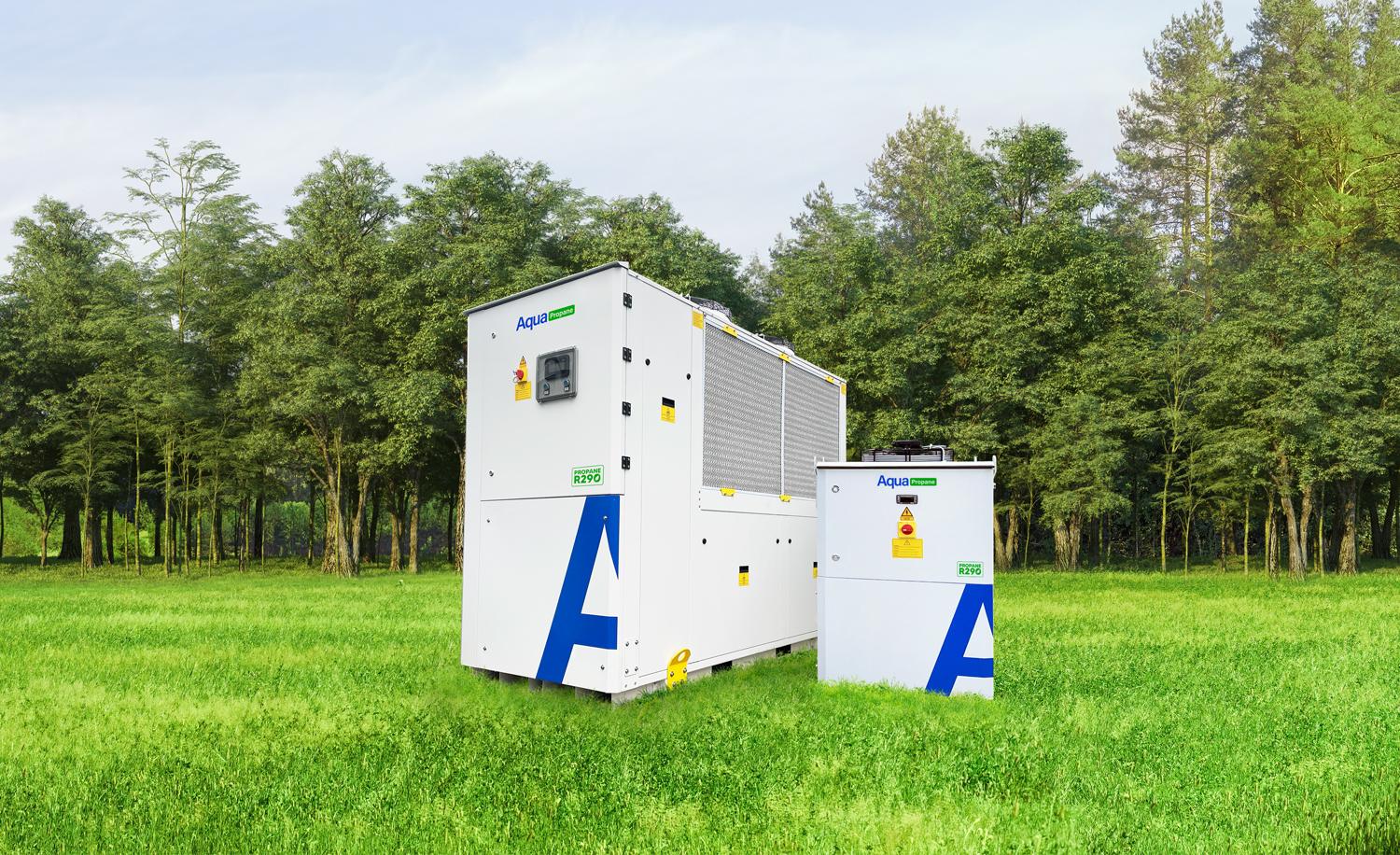
In the modern refrigeration and cooling industry, choosing the right system is crucial for efficiency, safety, and environmental impact. Two major options that businesses and industries often consider are propane chillers and systems using traditional refrigerants. While both achieve the primary goal of cooling, they differ significantly in their design, operation, environmental footprint, and safety considerations. Understanding these differences can help organizations make informed decisions that align with their operational goals and sustainability initiatives.
Understanding Propane Chillers
Propane chillers use propane (R-290) as a refrigerant, a naturally occurring hydrocarbon that has gained popularity due to its high energy efficiency and low environmental impact. Unlike synthetic refrigerants, propane is non-ozone-depleting and has a very low global warming potential (GWP). This makes propane chillers an attractive option for companies looking to reduce their carbon footprint while maintaining high performance.
The basic operation of a propane chiller is similar to traditional vapor-compression refrigeration systems. It involves the circulation of propane through a closed loop, where it absorbs heat from the environment or a process fluid and releases it via a condenser. The efficiency of propane as a refrigerant is notable, with excellent thermodynamic properties that allow for faster heat transfer and reduced energy consumption.
Overview of Traditional Refrigerants
Traditional refrigerants, such as R-22, R-134a, and R-410A, have been the standard in cooling systems for decades. These synthetic chemicals were developed to provide effective refrigeration while being stable and easy to handle. While traditional refrigerants are effective in achieving cooling, many of them have been identified as harmful to the environment. For instance, R-22 contributes to ozone depletion, and many hydrofluorocarbons (HFCs) have high GWPs, making them less environmentally friendly.
Traditional refrigerant systems are widely used in residential, commercial, and industrial applications. Their infrastructure is well-established, and technicians are extensively trained to maintain and repair these systems. However, with increasing environmental regulations, the use of certain refrigerants is being phased out, making propane chillers a more future-proof alternative.
Environmental Impact Comparison
One of the most significant differences between propane chillers and traditional refrigerants is their environmental impact. Propane is a naturally occurring refrigerant with a GWP of approximately 3, which is negligible compared to traditional HFCs like R-134a (GWP of 1,430) or R-410A (GWP of 2,088). This low GWP means that propane chillers contribute far less to global warming if released into the atmosphere.
Additionally, propane does not deplete the ozone layer, unlike older refrigerants such as R-22, which were phased out under the Montreal Protocol due to their ozone-depleting potential. Companies aiming to meet sustainability targets or comply with stricter environmental regulations are increasingly turning to propane chillers to reduce their ecological footprint.
Energy Efficiency and Performance
Propane chillers offer impressive energy efficiency due to propane’s thermodynamic properties. Propane has a high latent heat of vaporization, which allows it to absorb more heat per unit of mass compared to many traditional refrigerants. This translates into faster cooling and lower energy consumption for the same cooling capacity.
Traditional refrigerants vary in efficiency depending on the specific type used. While some modern HFCs are optimized for energy performance, many older systems using R-22 or R-134a are less efficient, especially under higher load conditions. Transitioning to propane chillers can therefore provide both operational cost savings and reduced energy usage, which is beneficial in large-scale industrial or commercial applications.
Safety Considerations
Safety is a critical factor when comparing propane chillers to traditional refrigerants. Propane is flammable, and its use requires specialized equipment, proper ventilation, and adherence to strict safety codes. Although the risk is manageable with appropriate precautions, it necessitates extra training and infrastructure investment.
In contrast, many traditional refrigerants are non-flammable and considered safer for general use, making them convenient for residential and commercial settings. However, certain HFCs can still pose environmental hazards, and some older systems using refrigerants like R-22 require careful handling due to toxicity concerns.
System Design and Maintenance
The design of propane chillers often incorporates safety features to minimize fire risk, such as leak detection systems, flame arrestors, and explosion-proof components. Maintenance of propane chillers may be more specialized due to the need for technicians familiar with hydrocarbon refrigerants. Despite this, the lifecycle maintenance costs can be lower because propane systems tend to operate efficiently and have fewer long-term environmental compliance issues.
Traditional refrigerant systems benefit from decades of engineering standardization. Replacement parts, repair procedures, and technician expertise are widely available, making these systems easier to maintain in conventional settings. However, as regulations phase out older refrigerants, retrofitting or replacing traditional systems can become costly.
Cost Implications
When considering initial investment, propane chillers may have a slightly higher upfront cost due to specialized safety features and compliance requirements. Over time, however, the superior energy efficiency of propane chillers can offset these initial expenses through reduced electricity bills and lower environmental compliance costs.
Traditional refrigerant systems often have lower initial installation costs, especially in existing infrastructure. Yet, the need to eventually replace phased-out refrigerants, retrofit equipment, or deal with potential environmental fines can make these systems more expensive in the long run.
Applications and Suitability
Propane chillers are particularly suitable for industries prioritizing sustainability and energy efficiency. They are commonly used in commercial refrigeration, process cooling, ice rinks, and industrial cooling applications. Their compact design and high efficiency make them adaptable to various environments while meeting environmental standards.
Traditional refrigerants continue to dominate residential air conditioning, commercial HVAC systems, and some industrial applications. Their familiarity, safety, and established service network make them convenient, although regulatory pressures are encouraging gradual transitions to low-GWP alternatives like propane.
Future Trends in Refrigeration
The refrigeration industry is moving toward environmentally friendly solutions, and propane chillers are at the forefront of this transition. Regulatory trends, such as the Kigali Amendment to the Montreal Protocol, aim to reduce HFC usage globally, pushing businesses to adopt low-GWP refrigerants. Propane chillers align with these regulations, offering a sustainable and efficient alternative to traditional systems.
Innovation in propane-based technology is also improving safety, efficiency, and scalability, making it a viable option even in markets that were previously dominated by synthetic refrigerants. As awareness of climate change grows, the shift toward propane chillers is expected to accelerate.
Conclusion
Choosing between propane chillers and traditional refrigerants requires careful consideration of efficiency, environmental impact, safety, and long-term costs. Propane chillers stand out for their low global warming potential, energy efficiency, and compliance with modern environmental regulations. However, they require stringent safety measures due to flammability and may involve higher upfront costs. Traditional refrigerants remain convenient and widely used, but regulatory restrictions and environmental concerns are gradually limiting their viability.
For businesses and industries aiming for sustainable operations, propane chillers offer a future-ready solution that balances performance, efficiency, and environmental responsibility, making them an increasingly attractive choice in the evolving world of refrigeration.